
When Jane first noticed muffled hearing in her right ear, she assumed it was just earwax buildup. Several months later, when persistent dizziness began affecting her daily activities, a visit to her doctor revealed something unexpected: an acoustic neuroma.
Contents
- 1 Demystifying Acoustic Neuromas
- 2 The Origins: Why Do These Tumors Form?
- 3 Diagnostic Journey: Confirming an Acoustic Neuroma
- 4 Treatment Approaches: Tailoring Care to Individual Needs
- 5 Recovery and Adaptation: Life After Diagnosis
- 6 Future Directions in Acoustic Neuroma Care
- 7 When to Seek Medical Attention
- 8 The Patient Perspective
- 9 Closing Thoughts
Demystifying Acoustic Neuromas
An acoustic neuroma (vestibular schwannoma) represents a distinctive category of intracranial growth that develops from specialised cells called Schwann cells. These cells are designed as insulating cells and cup the auditory nerve to allow a fast transmission of sounds to the brain. What happens in an acoustic neuroma is these cells multiply abnormally around the nerve in the vestibulocochlear pathway. This pathway connects the inner ear to —the crucial connection linking our inner ear to the brain’s processing centers.
Unlike malignant brain tumors, acoustic neuromas don’t spread to other body parts. However, the concern with an acoustic neuroma is that it is growing in the fixed space of the skull which means it can push on other parts of the brain causing different issues.
The Origins: Why Do These Tumors Form?
The majority of acoustic neuromas (approximately 95%) appear without clear cause—what medical professionals term “sporadic cases.” These usually only affect one ear.
A smaller percentage stems from a hereditary condition called neurofibromatosis type 2 (NF2). People with NF2 often develop acoustic neuromas on both sides and may have additional tumors along their spine or brain. Recent genetic research has shown this can be from a mutation in the NF2 tumor suppressor gene on chromosome 22. This normally works to make sure cells are not dividing uncontrollably.
Recognising the Warning Signs
The silent nature of acoustic neuromas means symptoms usually develop slowly and can be misinterpreted for other issues or simply ageing.
- Progressive One Sided Hearing Loss: Usually the earliest sign, affecting one ear and worsening over time
- Tinnitus: Persistent ringing, buzzing, or hissing sounds, usually in one ear only
- Balance Problems: This can range from mild unsteadiness to pronounced difficulty walking or coordinating movements
- Facial Sensation Changes: Numbness, tingling, or pain in the face due to pressure on the trigeminal nerve
- Headaches: Particularly in the morning or when changing head positions
- Facial Muscle Weakness: In advanced cases, affecting expression, eye closure, or mouth movement
Interestingly, symptoms don’t always correlate directly with tumor size. Some people with small tumors experience significant symptoms, while others with larger growths can have minimal issues.
Diagnostic Journey: Confirming an Acoustic Neuroma
Modern diagnostic approaches have dramatically improved the identification of these tumors, often before they reach problematic sizes:
Initial Assessment
- Comprehensive Hearing Evaluation: Specialised tests like pure-tone audiometry and speech discrimination assessments often reveal asymmetric hearing loss patterns characteristic of acoustic neuromas. This is the type of assessment Hearing Sense can provide.
- Vestibular Function Testing: Electronystagmography (ENG) or videonystagmography (VNG) tests how your balance system is working.
Definitive Imaging
- High-Resolution MRI with Gadolinium Enhancement: Usually your GP or ENT will refer you for an MRI. This is the gold standard to detect an acoustic neuroma.
- CT Scanning: Sometimes used when MRI isn’t possible or to evaluate bone structure changes
Other Diagnostic Tools
- Auditory Brainstem Response Testing: Measures electrical activity traveling through the hearing pathway
- Otoacoustic Emissions Testing: Evaluates the function of outer hair cells in the inner ear
Treatment Approaches: Tailoring Care to Individual Needs
Management strategies for acoustic neuromas have evolved over the years. It certainly isn’t a one size fits all surgical approach nowadays.
Monitoring
For small, minimally symptomatic tumors, especially in older patients, regular monitoring may be recommended. This typically involves:
- Biannual or annual MRI scans
- Regular hearing assessments
- Vigilant symptom tracking
Surgical Interventions
When removal becomes necessary, neurosurgeons may employ several approaches:
- Translabyrinthine Approach: Offers excellent tumor visualisation but all hearing is lost in that ear
- Retrosigmoid Approach: This tries to preserve hearing when tumor characteristics and anatomical considerations allow
- Middle Fossa Approach: This works best for smaller tumors where hearing preservation is a priority
Radiation-Based Treatments
- Stereotactic Radiosurgery: Precision-targeted radiation (Gamma Knife, CyberKnife, or LINAC systems) stops tumor growth while avoiding surgery.
- Fractionated Radiotherapy: Delivers radiation over multiple sessions, potentially reducing side effects for certain patients
Recovery and Adaptation: Life After Diagnosis
Regardless of treatment path, patients often face adjustment periods:
Physical Rehabilitation
- Vestibular Therapy: Customised exercises to retrain the brain’s balance mechanisms
- Facial Nerve Rehabilitation: Specialised therapies for those experiencing facial weakness
Hearing Management
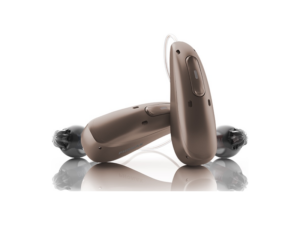
- CROS Hearing Aids: By wearing two devices, we can channel sound from the affected side to the functioning ear through wireless technology. Hearing Sense offer a full range of CROS devices to trial.
Psychological Support
- The emotional impact of diagnosis and treatment shouldn’t be underestimated
- Support groups and counseling can provide valuable coping strategies
Future Directions in Acoustic Neuroma Care
Research continues to advance our understanding and treatment of these complex tumors:
- Molecular Targeted Therapies: Investigating medications that could target the specific cellular pathways driving tumor growth
- Hearing Preservation Techniques: Refinements in surgical approaches and radiation delivery to maximise functional outcomes
- Quality of Life Research: Better understanding how various treatment approaches affect long-term patient satisfaction
When to Seek Medical Attention
Consult a healthcare provider promptly if you experience:
- Unexplained hearing loss in one ear
- Persistent dizziness or balance problems
- Facial numbness or weakness
- Constant ringing in one ear
Early identification typically offers more treatment options and better outcomes. Hearing Sense offer a full comprehensive hearing assessment to help you if you are noticing these symptoms.
The Patient Perspective
Sarah, a 42-year-old acoustic neuroma survivor, shares: “The hardest part was the uncertainty. Once I understood what was happening and my treatment options, I could make informed decisions about my care. Three years post-treatment, I’ve adapted to the changes in my hearing and balance, and life has largely returned to normal.”
Closing Thoughts
While acoustic neuromas present unique challenges, advancements in detection and treatment have really helped patients get back to normal life quicker and easier than years gone by.The multidisciplinary approach—by combining neurosurgery, otolaryngology, radiation oncology, and audiology rehabilitation specialties—continues to improve outcomes and quality of life for those diagnosed with these distinctive tumors.
If you’re experiencing unexplained hearing or balance changes, don’t hesitate to discuss these symptoms with your doctor or an audiologist at Hearing Sense. Early evaluation often leads to earlier diagnosis and more treatment options.