
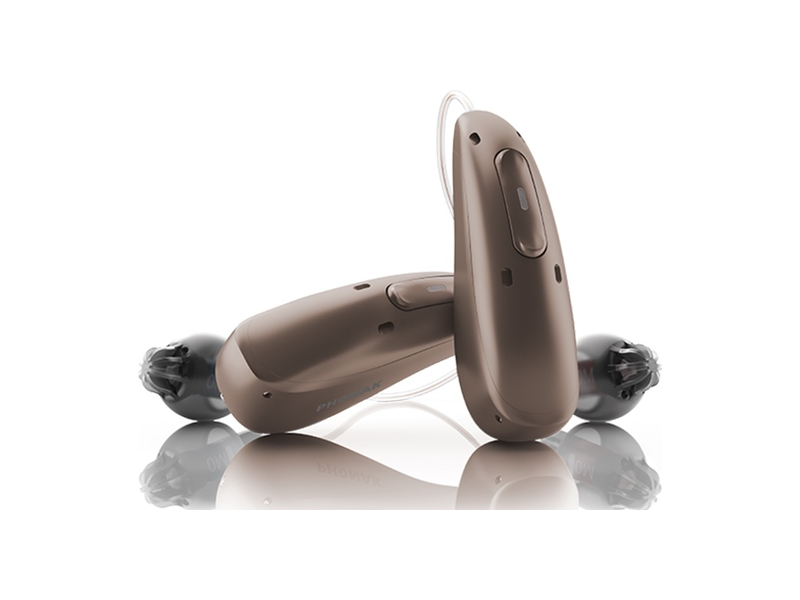
If you have just started wearing a hearing aid, you have probably noticed that everyday sounds can feel louder or more textured than before. That is completely normal, and noise reduction is the technology that helps your device tell speech apart from background noise so conversations feel easier to follow.
This guide is written for new wearers, with a special look at how the Phonak Infinio Ultra manages noise.
Contents
A quick refresher on noise reduction
Your hearing aid aims to sort the sounds around you into speech and non-speech, then quietens the background while keeping voices clear. The goal is more comfortable, less tiring listening.
We cover the mechanics in detail in our main noise reduction guide, so here we will focus on what this means for you as a new user and what the Infinio Ultra brings to the table.
What Phonak Infinio Ultra means for noise reduction
Not every noisy room is the same, and the Infinio Ultra is built around that idea. It keeps communication front and centre, using a well-trained system to continuously analyse the sound around you as you move through different environments, then automatically adjusts the balance between speech and noise.
Rather than relying on a single trick, the Infinio Ultra combines several strategies that work together:
- Directional microphones that focus on the person in front of you
- Binaural beamforming that uses both hearing aids as a team to lock onto speech
- Dynamic noise cancellation that softens distracting background sound in real time
- Deep Neural Network (DNN) technology trained on real-world sound to separate speech from noise more naturally
The result is consistent, comfortable performance that follows you from a quiet lounge room to a busy cafe without you having to fiddle with settings.
Practical tips for getting the most out of your Infinio Ultra
- Start with automatic modes. Let the device manage most settings at first.
- Try different environments. Spend time in a quiet room, a cafe or supermarket, and a group setting. Notice where speech comes through clearly and where you still feel challenged. Your input helps refine the balance between speech and noise.
- Customise with your hearing specialist. Work with your Hearing Specialist to tailor settings for the moments that matter most to you, whether that is hearing everyone clearly at family dinners, catching the conversation at your weekly book club, or following the chat over coffee with friends.
- Be patient. It can take a few weeks to adapt to a new soundscape while your brain re-learns how to interpret amplified sound. Our guide on trialling a hearing aid explains what to expect during this settling-in period.
FAQ: How does noise reduction affect music or media listening?
Noise reduction is tuned mainly for speech, so music can sound different at first because it has a much wider range of tones than conversation. Many devices, including the Infinio Ultra, offer dedicated music or media programs that ease back on the speech-focused processing to keep music sounding rich and natural. If you love listening to music or streaming TV, mention it to your hearing specialist so they can set up the right program for you.
A closing thought for new users
Noise reduction is a practical, everyday tool that helps many people hear speech more clearly in real-world settings. It will not erase every sound, but it can meaningfully reduce the background noise that makes conversations tiring. If you are curious about how the Infinio Ultra or other models handle noise, the best next step is a guided fitting with a hearing specialist who can tailor the technology to your life, goals, and listening environments. Book an appointment with the Hearing Sense team to get started.
Interested to know more about how noise reduction in hearing aids works? Our companion guide, how noise reduction in hearing aids works, explains it all.